Torrey, Utah / Guided trips / Photography
The permit rules changed and almost nobody updated their page
Capitol Reef Photography Tours
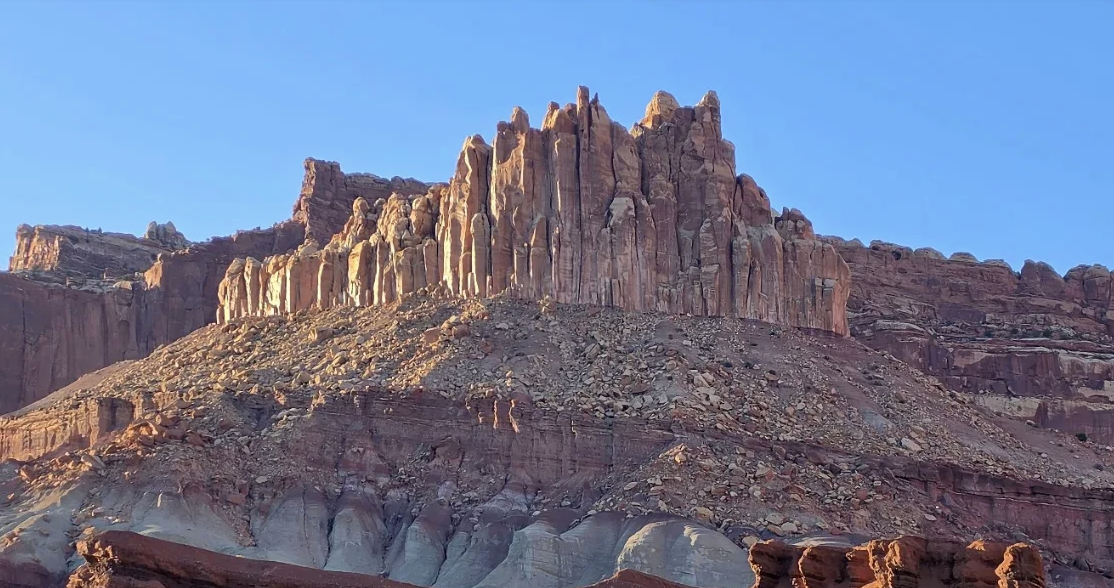
Capitol Reef photography tours are worth booking for access and timing, not for permission. Since the EXPLORE Act, a group of eight or fewer shooting with hand carried gear in public areas needs no permit here at all, commercial intent included. What is still firmly banned is light painting and drones. This page sorts the permit question properly, then covers the workshops and guided shoots actually running out of Torrey.
If you read one section
You are almost certainly fine without a permit
The rule most people are worried about no longer applies to them. The Park Service states that in most cases, permits and fees are not required for groups of eight individuals or less conducting filming and photography, provided the activity occurs in areas open to the public, uses hand carried equipment only, does not require exclusive use of a site and does not adversely impact park resources, values or other visitors.
That covers a tripod, a long lens, a second body, a client, and selling the pictures afterwards. It even covers portraits: the park states plainly that portrait subjects, such as wedding parties and high school graduates, are not considered models, which is the clause that trips up most wedding and senior photographers.
What a tour actually buys is time and judgment. Somebody who knows which wall lights at 7:10 in October, which road is passable after rain, and where you can stand without stepping on soil crust. That is worth paying for in a park where the good light lands somewhere different every month.
Shooting at night? The stargazing page has the park's own measured sky quality readings by location, which is the most useful thing published anywhere about where to set up after dark.
The honest version
Do you need a permit, actually
There are two separate systems here and they get conflated constantly. One governs the act of taking pictures. The other governs selling a photography service to other people inside the park. You can need neither, one, or both.
| What you are doing | Permit needed? | Why |
|---|---|---|
| Shooting for yourself, any gear you can carry | No | Well inside the group of eight threshold |
| A paid portrait, wedding or senior session, small party | No | Eight or fewer, hand carried gear, public areas. The park states portrait subjects are not considered models |
| Selling a photography workshop or guided photo tour to clients | Yes, a CUA | The park runs a Photography Instruction category covering workshops, including short hikes to overlooks and points of interest. This is a business authorization, not a shooting permit |
| Shooting where the public is not generally allowed, or after hours | Yes | One of the three triggers the park names for a still photography permit |
| Using models, sets or props that are not part of the landscape | Yes | The second named trigger |
| Anything needing the Park Service to monitor you | Yes | The third named trigger, and it carries a $50 an hour monitoring charge |
If you do land in permit territory, the published figures are a $100 non refundable application fee, a $150 permit fee, and location fees of $50 a day for one to ten people, $150 for eleven to thirty, $250 for more than thirty. Simple requests take two weeks and anything involving multiple locations or complex logistics takes a minimum of four. Applications go through the park's commercial services office.
The commercial use authorization side is a separate animal. It costs $350 for a first application and $250 for subsequent ones from the same applicant, and the park runs fifteen service categories, one of which is Photography Instruction. Holding one is a licensing and insurance check, not an endorsement. The park says so directly: it issues these authorizations but does not provide any specific recommendations or assess the content of the tours, and it tells visitors to interview the guide.
One honest caveat. The park does not publish a single sentence drawing the line between the filming permit system and the workshop authorization system. The reading above is ours, built from its two pages. If your shoot sits near the boundary, the commercial services office answers the phone on 435 425 4130.
Short list, strictly enforced
What is actually banned
Light painting
The park's wording: using artificial light sources to light up landscapes, rock formations or other park features is prohibited. Artificial light sources may be used for personal route finding or minimum impact camping only.
This is a dark sky park and the rule sits in the superintendent's compendium, so it has teeth. It also means the lit foreground rock you have seen in other people's Capitol Reef astro shots was either taken before the rule, taken elsewhere, or taken by someone breaking it.
Drones
The park's wording: the use of unmanned aircraft like drones is not allowed in the park. No permit, no exception, no quiet corner. The reasons the park gives are public safety, visitor use conflicts and impact on scenic values, natural soundscapes and wildlife.
If you want aerial footage in this region, Goblin Valley State Park permits drones by permit at $15 a day under specific conditions. That page has the detail.
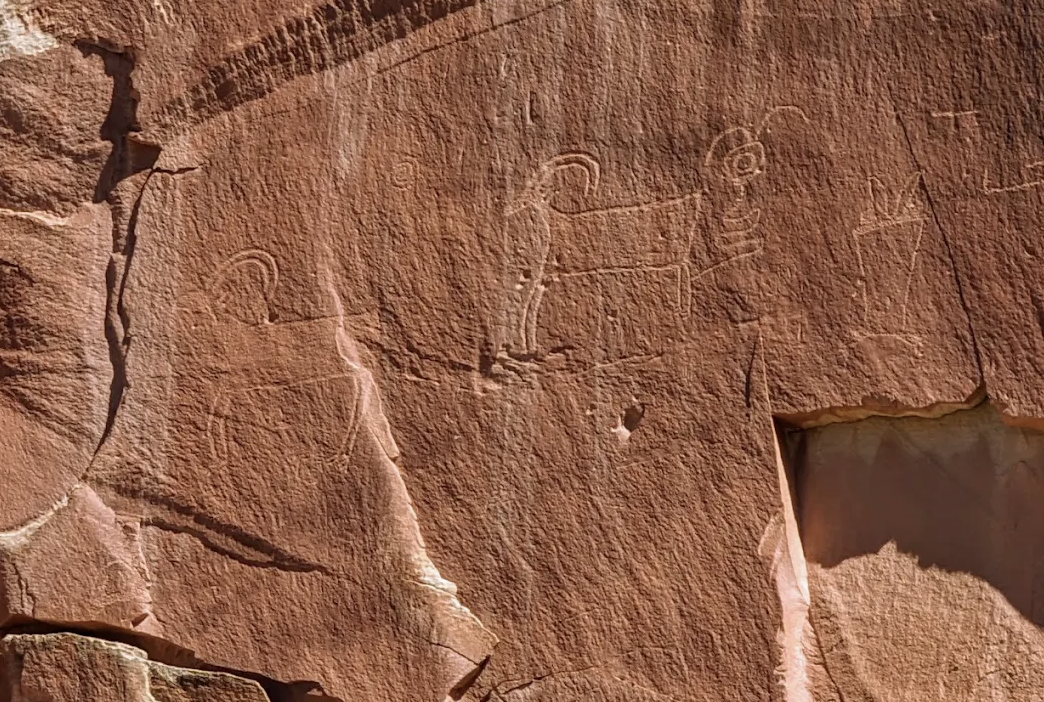
Two more that matter to photographers without being photography rules. Stay on established trails, avoid stepping on biological soil crust and do not shortcut switchbacks. And do not disturb archeological sites: collecting anything, plant, animal, mineral or artifact, is illegal within the park. The Fremont petroglyph panel carries penalties under the Archaeological Resources Protection Act of up to a year in prison and a $20,000 fine for vandalism, which is why the boardwalks exist.
What is not restricted, despite what you may read: tripods. Capitol Reef publishes no tripod rule at all. The only place the park mentions tripods is in the required gear list for its own workshops. A tripod is hand carried equipment and does not by itself trigger a permit.
Everyone we can find
Workshops and guided shoots
Everything below is what each company publishes on its own site, checked September 2026, except where we say we could not read it. The range here is unusually wide, from a free ranger session to a four day workshop with three photographers.
| Who | Contact | What they publish | Suits |
|---|---|---|---|
| National Park Service astrophotography workshops | 435 425 4112 | Free. Evening sessions with a nationally recognized astrophotographer, limited to 15 participants, with an optional editing drop in the following morning. Registration by email or phone. Dates move each year, so check the park's workshop page | Anyone. Genuinely the best value night here |
| Teasdale Plateau, with Willie Holdman | Via their site | Four day workshops at $2,000 per photographer, $1,000 for a non photographing partner. Maximum three photographers or six guests. Includes lodging in a cabin, all meals, transport, daily instruction and image critique. Locations include the park, Boulder Mountain, the Burr Trail and Calf Creek Falls. Two sessions a year, spring and autumn | Serious amateurs who want small group teaching and everything handled |
| Waterpocket Adventure Company | 801 400 7558 | A dark sky photography trip, two to six hours from $270, and a sunset tour, two hours from $260. Their dark sky booking link hands off to another photography company, so ask who is actually guiding | Photographers who want a driver and a location on a specific night |
| Meridian Tours | 435 491 0150 | A one hour stargazing session at $70 per person with a Milky Way portrait at $150. Their day tours run $180 to $350 per person to Cathedral Valley, the Bentonite Hills, the Temples and Moonscape Overlook, one to eight passengers | Getting to a specific location at a specific hour without driving it yourself |
| Get in the Wild Adventures | Hanksville based | A sunrise or sunset photography tour at $195 per person, four hours, groups of two to eight, March to November, meeting in Hanksville. A three day canyon photography workshop at $1,295 per person, groups of four to six, including canyoneering instruction and federal land permit fees | Slot canyon and desert work, from the Hanksville side rather than the park |
| Hunter Page Photography | 801 472 1202 | Runs a Capitol Reef astro tour, Capitol Reef photography tours and Waterpocket Fold tours. Their website blocks automated reading, so we have no prices, durations, group sizes or inclusions to give you. Call them | Unknown to us, and we would rather say that than guess |
Two things worth knowing about that table. The Get in the Wild photography trips are built around the Dirty Devil and Robbers Roost country near Hanksville, not Capitol Reef, and they do not claim otherwise. And the Teasdale Plateau workshop is the only multi day, small group, lodging inclusive photography workshop we can find based in this valley, which makes it the one competitor pages consistently miss.
Nobody on this list publishes a Capitol Reef commercial use authorization on their website. The park publishes no list of who holds one. If your trip involves instruction inside the park boundary, ask the question on the phone, and treat a clear answer as a good sign about everything else.
Where the park itself points
Locations, with what the park publishes
Capitol Reef has no official photography locations page. What it does have is a trail table that flags two walks as good for sunset, and a handful of places it names in other contexts. Here is what is actually sourced rather than passed around.
| Location | Access | Why |
|---|---|---|
| Sunset Point | 0.4 miles one way, under 50 feet of climb, off the Panorama Point turnoff | The park's trail table calls it a panorama and marks it good for sunset. The shortest route to real light in the park |
| Chimney Rock Loop | 3.6 miles round trip, 590 feet, rated strenuous | Also marked good for sunset by the park, and a very different picture from the valley floor |
| Goosenecks Overlook | 0.1 miles one way, under 50 feet | Straight down into Sulphur Creek canyon. Two minutes from the car |
| Panorama Point | Paved pullout, 2.5 miles west of the visitor center | The whole fold in one frame, and no walking at all |
| Cathedral Valley Overlook | On the 57.6 mile Cathedral Valley loop. High clearance, usually four wheel drive | The park names the view from here specifically, and calls Cathedral Valley a popular place for night sky photography |
| Hickman Bridge | 0.9 miles one way, 400 feet, rated moderate | A natural bridge with morning light behind it. Shoot it early, before the lot fills |
| Burr Trail | Paved from Boulder, graded dirt inside the park | Named by the park in the context of dark sky viewing |
All the trail distances above are the park's own figures and they are published one way, not round trip. Double them before you work out whether you can be somewhere for last light and back at the car afterwards. The one day page has the full conversion table and the parking clock, which matters more to photographers than to anyone else since the lots fill by 10am in the busy months.
Two locations get named constantly online and are not in the park at all: the Bentonite Hills and Moonscape Overlook, both on BLM land outside the boundary. They are genuinely spectacular and every tour operator here runs to them. They are also reached by unpaved roads that turn to slick clay in rain, so check road conditions before committing a dawn to one.
Straight answers
Photography questions
Do I need a permit to photograph in Capitol Reef?
In most cases no. The Park Service states permits and fees are not required for groups of eight or fewer, provided you are in areas open to the public, using hand carried equipment only, not requiring exclusive use of a site and not adversely impacting park resources or other visitors. That holds even if you are being paid.
Can I shoot a wedding or portrait session in the park?
Yes, within the same limits. The park states that portrait subjects, such as wedding parties and high school graduates, are not considered models, so a small session does not trigger the models clause. A wedding as an event may need its own special use permit, which is a separate application.
Are drones allowed at Capitol Reef?
No. The park states that the use of unmanned aircraft like drones is not allowed in the park, with no permit route available. Goblin Valley State Park, about two hours away, does allow drones under a $15 per day permit with specific restrictions.
Is light painting allowed?
No. Using artificial light sources to light up landscapes, rock formations or other park features is prohibited. Artificial light may be used for personal route finding or minimum impact camping only. Capitol Reef is a gold tier dark sky park and this rule sits in its superintendent's compendium.
Are tripods restricted?
No. Capitol Reef publishes no tripod rule. The only place tripods appear in park material is in the required gear list for its own free astrophotography workshops. A tripod counts as hand carried equipment and does not trigger a permit by itself.
How much is a photography tour here?
From free, if you can get into one of the park's astrophotography workshops, which take fifteen people. Paid options run $195 for a four hour sunrise or sunset tour, $260 to $270 for a sunset or dark sky trip, $1,295 for a three day canyon workshop, and $2,000 for a four day workshop with lodging and meals included.
What is the best time of year to photograph Capitol Reef?
Late September and October combine cottonwoods turning along the Fremont River, cooler temperatures, the monsoon winding down and low sun angles. Spring gives blossom in the orchards and empty trails. Summer gives the Milky Way but also 91 degree averages and afternoon storms. The month by month page has the thirty year record.
Where do I photograph the Milky Way here?
The park measured seven of its own locations and Cathedral Valley Campground came out darkest at 22.74 magnitudes per square arcsecond. The visitor center parking lot measured 21.83, which is remarkable for a paved lot. Just remember that light painting is prohibited, so plan for a foreground that works under starlight alone.
Permit thresholds, fees and prohibitions come from the National Park Service pages on filming and photography and park regulations, checked September 2026. Workshop and tour details are what each company publishes about itself, and where a site could not be read we have said so rather than filling the gap.
Next step
Book the light, not the permission
The paperwork is mostly not your problem. Timing, roads and knowing which wall lights when are, and that is what a guide is for.
Also useful: which permits exist at all, blossom and harvest dates and where to stay. Or who writes this site.